Action-adventure
Exploration, combat and puzzles blended together, usually with a focus on a central character and a journey through varied places.
Genre labels can be confusing at first. This explainer breaks down the most common categories and suggests ways to find the kind of game that fits your taste.
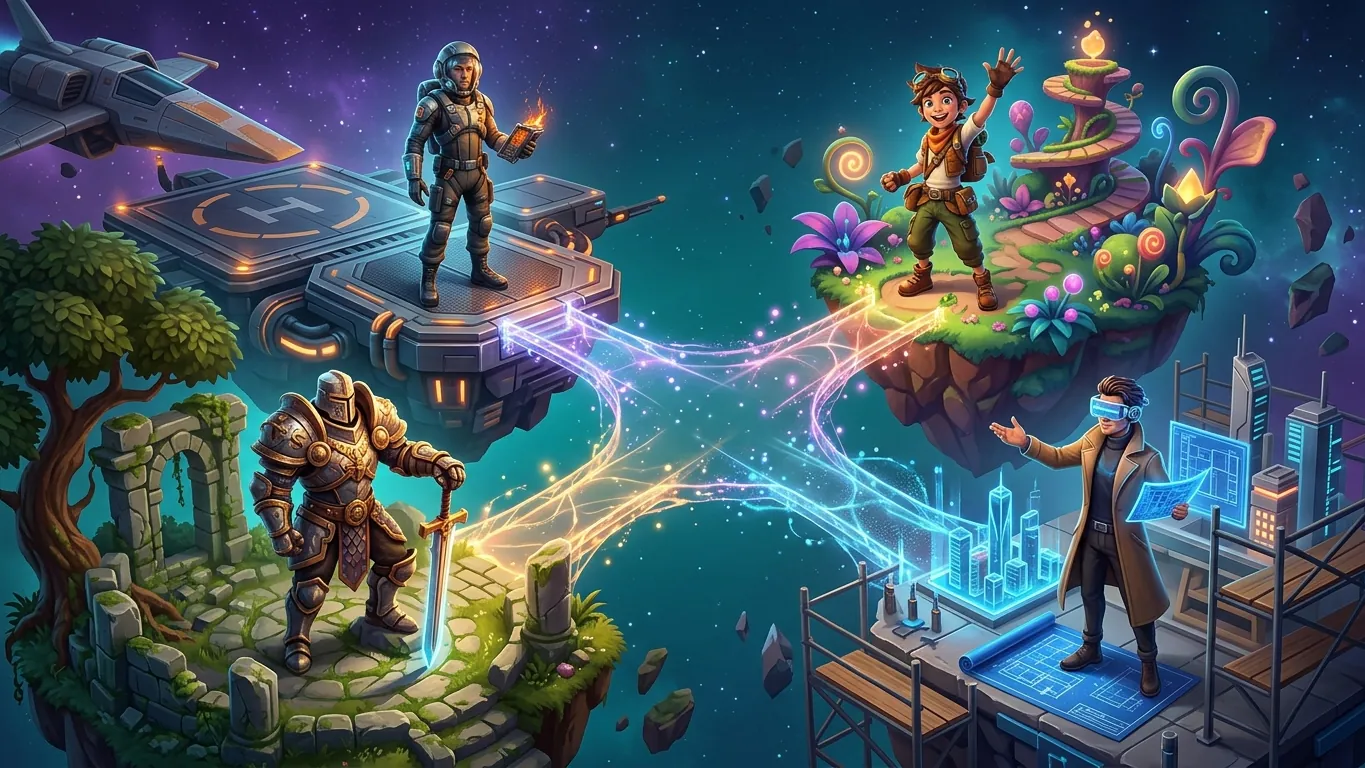
A genre is a shorthand that describes how a game plays rather than what it is about. A role-playing game set in space and one set in a medieval kingdom can share much more in common with each other than with a racing game set in the same universe.
Genres help you narrow down choices and describe what you enjoy. However, they are not strict rules. Many modern games borrow ideas from several genres, and two games with the same label can feel very different. Treat genre names as a helpful starting point, then look at the specific mechanics, pacing and tone of each game.
Here are some of the categories you will see most often on PC and console storefronts.
Exploration, combat and puzzles blended together, usually with a focus on a central character and a journey through varied places.
Games where your character grows over time through experience, equipment and choices, often with a strong story and many side activities.
Games about planning and decision-making, whether you are moving units on a battlefield in real time or taking turns to build an empire.
Fast-paced games built around aiming and movement, played from a first-person or third-person view, alone or with others online.
Games focused on running, jumping and precise movement through carefully designed levels, ranging from relaxed to very demanding.
Games that model systems such as farms, cities, vehicles or businesses, rewarding patience, experimentation and careful planning.
If you are not sure where to begin, think about the books, films or hobbies you already enjoy. If you love long stories and getting to know characters, a role-playing game or narrative adventure may appeal. If you enjoy puzzles, board games or planning ahead, strategy and puzzle games could be a good fit. If you prefer quick sessions with immediate action, shooters, racing games or arcade-style titles might feel right.
It also helps to consider how much time and attention you can give. Some genres reward long, focused sessions, while others are easy to pick up for half an hour and put down again. Choosing a game that matches your schedule makes it much more likely you will enjoy it.
As you explore, you will meet names that combine genres, such as action role-playing games, survival crafting games or roguelikes. A roguelike, for example, usually features repeated attempts through randomly arranged levels, where failure sends you back to the start but often lets you keep some progress or knowledge.
These hybrid labels can seem intimidating, but they are usually easy to understand once you see a few minutes of gameplay. Watching a short video of a game being played, or reading a plain description of its core loop, will often tell you more than its genre tag.
Even experienced players can get stuck in a comfortable routine with one genre. Trying something different now and then can be refreshing. A strategy fan might discover they love a calm farming simulation, and an action player might find a slow-paced puzzle game surprisingly absorbing.
Many games offer demos or adjustable difficulty, which make experimenting less of a commitment. Give a new genre a fair chance, but do not force yourself to continue if it is not fun. The point of exploring genres is to find more of what you enjoy.
 PC graphics settings explained
Understand common PC graphics settings, which ones tend to affect performance most and a simple routine for balancing visuals and smooth play.
Read more
 Healthy gaming habits for everyday players
General, practical ideas for comfortable and balanced gaming: breaks, posture, lighting, session planning and when to seek professional advice.
Read more
 How to manage your video game backlog
Too many unplayed games? Practical, low-pressure tips for sorting your backlog, choosing what to play next and enjoying the games you already own.
Read more